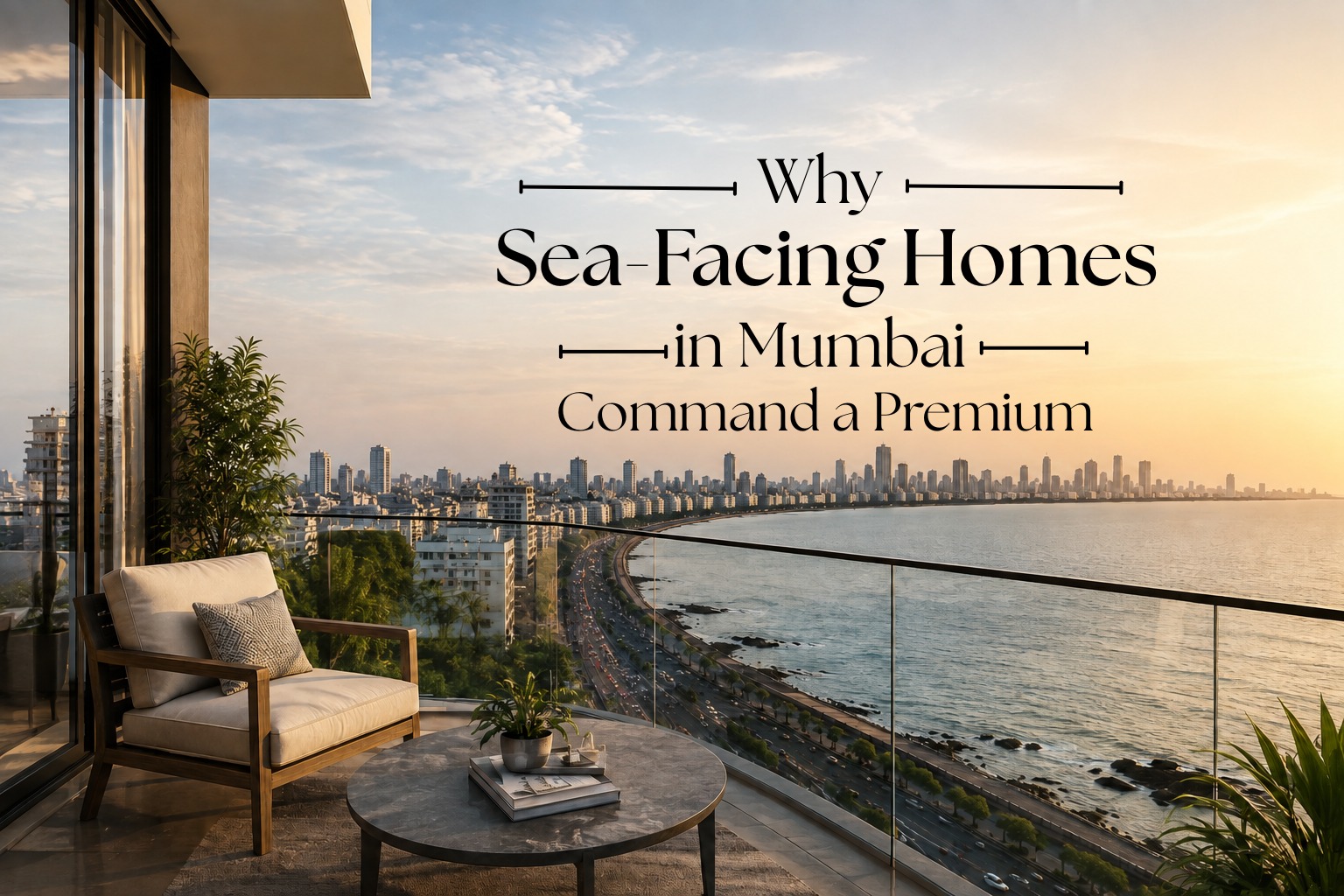
If you’ve ever house-hunted in Mumbai, you already know the drill. You find a flat you like, ask the price, and then the broker adds one line that changes everything: “It’s got a sea view, so it’s a bit more.” Sometimes a lot more.
This isn’t just a sales pitch. Sea-facing homes in Mumbai genuinely sell faster and for higher prices than almost identical flats just a few floors down, or a few streets inland. So what’s really going on here? Why does looking at water cost so much in this city? Let’s talk through it in plain terms.
There’s Simply Not Much Sea-Facing Land Left
Mumbai sits on a peninsula, surrounded by water on three sides. You’d think that means endless coastline to build on. It doesn’t.
Most of that coast is off-limits for construction. Coastal Regulation Zone (CRZ) rules protect large stretches. Mangroves cover more. Ports, naval areas, and slum rehab zones take up even more. What’s actually left — land that’s both legal to build on and genuinely faces open water — is a tiny sliver of the city.
That’s really the whole story in one sentence: there’s very little sea-facing land, everyone wants it, and nobody can make more of it. That’s why sea view apartments in Mumbai cost so much more than a flat with the exact same layout facing a compound wall.
So How Much Extra Are We Talking About?
In areas like Worli Sea Face, Marine Drive, Bandra Bandstand, and Malabar Hill, a proper, unobstructed sea view can add 15% to 40% to the price of an identical flat in the same building. A high floor with a clear, uninterrupted view costs more than a lower floor where you can only glimpse the water between other buildings.
This isn’t unique to Mumbai — Miami, Sydney, Hong Kong all charge more for a water view. But Mumbai’s premium is sharper because there’s so little space and so many people competing for the same slice of coastline.
What Makes the View Worth the Extra Money
A view no one can ever take away
A gym or a swimming pool can be added to any building later. A sea view can’t. If your flat
has one, no builder can put up a tower next door and block it — and no new project can ever recreate what you already have. You’re not just buying a flat, you’re buying a view that stays yours for good.
Better air, quite literally
Homes near the sea get steady airflow and generally cleaner air than areas boxed in by traffic and construction dust. In a city like Mumbai, where pollution is a real everyday problem, that’s not a small detail — it genuinely affects how you feel day to day.
The address does the talking
An address on Worli Sea Face or Marine Drive carries its own weight. It’s not just where you live, it’s a quiet marker of how far you’ve come. That reputation sticks with the property and adds real value when it’s time to sell or rent it out.
Tenants line up for it
Companies relocating senior staff, especially from abroad, often specifically ask for sea-facing or high-floor homes. That means landlords with a sea view rarely struggle to find good tenants — and those tenants are usually willing to pay well for it.
It just feels calmer
This one isn’t just a feeling — researchers who study “blue space” (time spent near open water) have linked it to lower stress and a better mood. Waking up to the sea instead of a neighbour’s wall changes how a home feels to live in, even if it’s hard to put a price on.
But It’s Not All Upside — Here’s What to Watch For
Before you fall in love with the view, know what you’re signing up for:
- Things rust faster. Salt in the air eats into metal fittings, window frames, and building exteriors quicker than inland. Expect higher maintenance bills over time.
- More humidity. Homes near the water tend to feel damper, which isn’t great for wooden furniture, electronics, or fresh paint.
- Harder to renovate. Because of CRZ rules, getting approvals for major changes to coastal properties takes longer and involves more red tape.
- Monsoon can hit harder. Higher floors facing the open sea catch stronger winds and heavier rain during Mumbai’s monsoon months.
None of this is a dealbreaker if the building is well-maintained, but it’s worth knowing before you sign.
Where the Premium Is Highest
- Worli Sea Face – some of Mumbai’s priciest addresses, with clear views of the Bandra-Worli Sea Link.
- Marine Drive – the classic Mumbai postcard, lined with old Art Deco buildings right on the bay.
- Bandra Bandstand – popular with celebrities, sea views plus one of the city’s trendiest neighbourhoods.
- Malabar Hill – sits on higher ground, so many homes get sea views and city skyline views together.
Is It Actually Worth the Money?
If you’re buying to live in it, most people feel the premium is worth paying — the lifestyle, the calm, the prestige, it all adds up for them. If you’re buying purely as an investment, it’s a bit more nuanced. Sea-facing real estate in Mumbai tends to hold its value better in slow markets and rise faster in good ones, simply because supply can’t grow. But because the upfront price is so high, rental yield as a percentage often works out a little lower — even though the actual rent amount is strong.
The Bottom Line
At the end of the day, the premium isn’t random. It comes down to how little sea-facing land is actually left, how that affects your health and daily mood, the status it carries, and the simple fact that nobody can build more coastline. If you can afford the entry price and don’t mind a bit of extra upkeep, a sea view is one of the few things in Mumbai real estate that’s genuinely one-of-a-kind.
So next time a broker tells you “it’s got a sea view, so it’s a bit more” — now you know exactly why.
Thinking about buying a sea-facing home in Mumbai? Talk to a local real estate advisor to compare current rates across Worli, Bandra, and Marine Drive before you decide.