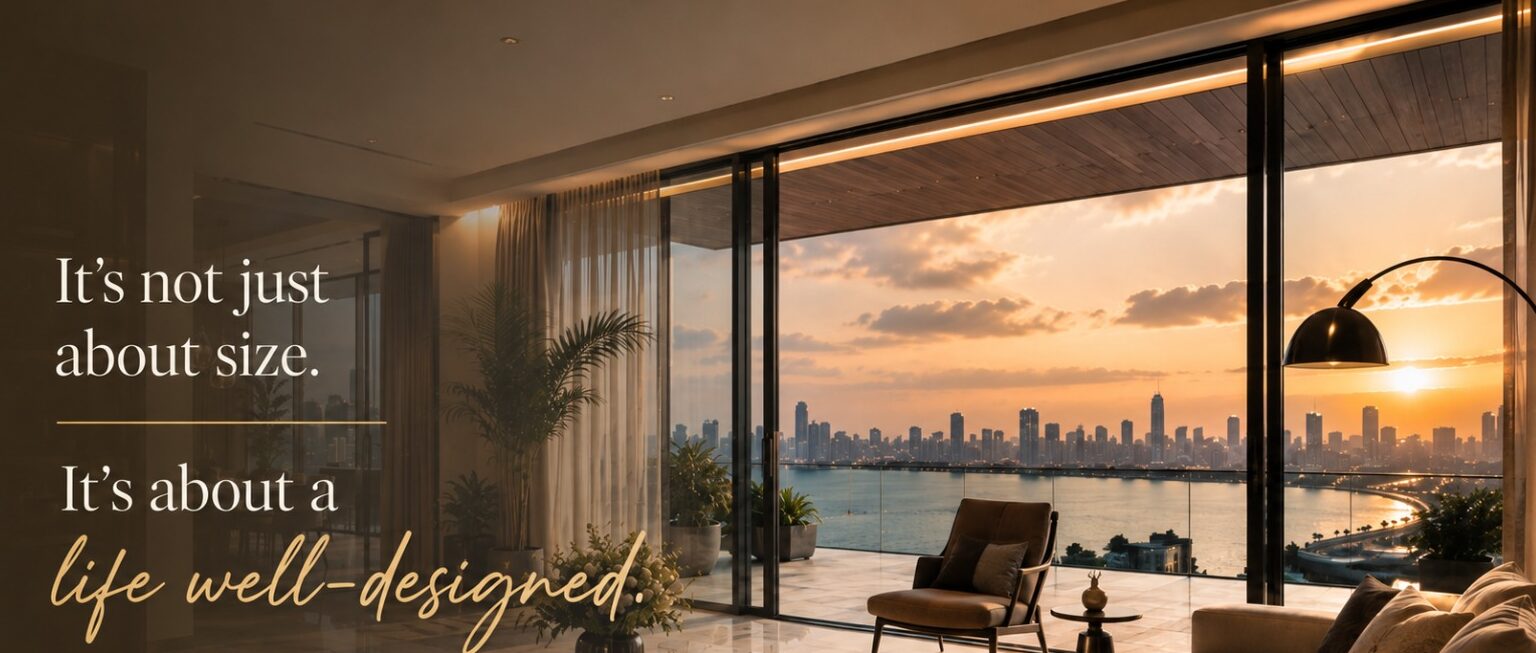
Walk into any real estate conversation and you’ll hear the same numbers thrown around: square footage, number of bedrooms, lot size. For decades, these figures have been treated as shorthand for luxury. Bigger house, bigger price tag, bigger status. But if you’ve ever stepped into a sprawling mansion that somehow feels cold and forgettable, or a modest, beautifully designed home that leaves a lasting impression, you already know the truth: size alone doesn’t make a home luxurious.
Luxury today is being redefined. It’s less about how much space you have and more about how that space makes you feel, how it functions, and how it reflects who you are. Let’s explore what truly separates a luxury home from a merely large one.
The Shift From “More” to “Better”
There was a time when luxury meant excess — the biggest house on the block, the most rooms, the tallest ceilings. That mindset is fading. Today’s affluent buyers, especially younger generations entering the luxury market, are prioritizing quality over quantity. They’d rather have a smaller home built with exceptional materials, thoughtful design, and cutting-edge technology than a massive one that feels generic.
This shift mirrors a broader cultural movement toward intentional living. People want homes that support their lifestyle, wellbeing, and values — not just homes that impress guests at a dinner party. As a result, the definition of luxury has expanded far beyond square footage into a more holistic experience.
Location and Setting Still Matter — But Differently
Location has always been a pillar of luxury real estate, and it still is. But what makes a location desirable has evolved. It’s no longer just about being in the “right” neighborhood or having a prestigious zip code. Today, luxury buyers are drawn to settings that offer privacy, natural beauty, and a genuine sense of place.
Think oceanfront properties with unobstructed views, homes tucked into quiet mountainsides, or urban residences with access to green spaces and walkable culture. The value isn’t just in the address — it’s in the experience the location provides. A luxury home today often blurs the line between indoor comfort and the natural or cultural richness of its surroundings.
Architectural Integrity and Thoughtful Design
One of the clearest markers of a true luxury home is architectural intention. Every element, from the flow of the floor plan to the placement of windows, should serve a purpose. Luxury isn’t about cramming in as many rooms as possible; it’s about creating spaces that feel balanced, functional, and beautiful.
This is where the difference between a large house and a luxury home becomes obvious. A large house might have a great room, a formal dining room, a home office, and a media room — but if none of these spaces connect logically or serve the way the family actually lives, the size becomes a burden rather than a benefit.
Luxury homes, by contrast, are designed with the resident’s daily life in mind. Natural light is maximized. Sightlines are considered. Transitions between rooms feel seamless. Even small details, like the height of a ceiling in a reading nook or the angle of a window in a primary suite, are deliberate choices meant to enhance daily living, not just impress at first glance.
Craftsmanship and Materials
If you want to understand what separates a luxury home from an ordinary one, look closely at the materials and craftsmanship. Luxury isn’t just what you see; it’s what you feel underfoot, what you touch on a countertop, and how a door closes with a satisfying, solid weight.
High-end homes often feature natural stone, hand-selected woods, custom cabinetry, and finishes that are built to last for generations rather than trend cycles. Skilled artisans and craftspeople are frequently involved, ensuring that details like moldings, staircases, and built-ins are executed with precision.
This attention to quality also means fewer shortcuts. A luxury home is far less likely to rely on mass-produced finishes or builder-grade fixtures, even if that means a smaller overall footprint. In many cases, buyers are willing to trade a few hundred extra square feet for materials and craftsmanship that simply feel better.
Technology That Enhances, Not Overwhelms
Modern luxury homes increasingly integrate smart technology, but the best examples do so thoughtfully. This isn’t about stacking every possible gadget into a house for the sake of novelty. It’s about technology that quietly enhances comfort, security, and efficiency.
Automated climate control, integrated lighting systems, advanced security features, and energy-efficient systems all contribute to a home that works intuitively for its owners. The luxury lies in the seamlessness. A well-designed smart home should feel effortless, not like you need a manual to turn off the lights.
Wellness-Centered Spaces
Perhaps one of the most significant shifts in luxury home design is the growing emphasis on wellness. Buyers today are looking for homes that actively support their physical and mental health, not just their social status.
This might look like a dedicated fitness studio, a spa-inspired bathroom with steam showers and soaking tubs, or a meditation room bathed in natural light. Outdoor spaces are also playing a bigger role, with luxury homes increasingly featuring private gardens, pools designed for relaxation rather than just aesthetics, and outdoor living areas that extend the home’s functional space.
Air quality, water filtration, and non-toxic building materials are also becoming part of the luxury conversation. In many ways, a truly luxurious home today is one that actively contributes to a healthier, calmer life.
Privacy and Security
Privacy has always been associated with luxury, but its importance has grown considerably. High-net-worth buyers are increasingly prioritizing homes that offer genuine seclusion, whether through gated access, thoughtful landscaping, or smart security systems that operate quietly in the background.
This isn’t about building a fortress. It’s about creating a sense of sanctuary — a place where residents can fully relax, knowing their home is a private retreat rather than an extension of public life.
Sustainability as a Status Symbol
Interestingly, sustainability has become one of the newer markers of luxury. Solar power, energy-efficient systems, sustainably sourced materials, and eco-conscious landscaping are no longer niche features reserved for environmentally focused buyers. They’re increasingly seen as signs of a forward-thinking, high-quality home.
This reflects a broader understanding that true luxury isn’t just about indulgence, but about responsibility and longevity. A home built to last, with minimal environmental impact, aligns with a more modern definition of what it means to live well.
The Emotional Component of Luxury
Perhaps the most important, and hardest to quantify, aspect of a luxury home is how it makes you feel. Does it feel calm? Does it feel like an extension of your personality and values? Does it offer a genuine sense of comfort and ease?
This emotional resonance is ultimately what separates a house from a home, and an expensive house from a truly luxurious one. Square footage can be measured with a tape measure, but the feeling of walking into a space that feels right cannot be quantified so easily.
Redefining Luxury for a New Era
The luxury home of today looks very different from the luxury home of a generation ago. It’s less about size for the sake of size, and more about intention, quality, and experience. Location, architecture, craftsmanship, technology, wellness, privacy, and sustainability all play a role in creating a home that feels genuinely luxurious.
As buyers continue to prioritize quality of life over sheer scale, the market is responding with homes designed to nurture, not just impress. Ultimately, a luxury home isn’t defined by how many square feet it covers, but by how thoughtfully every one of those feet is used.